


In use.
Geometry designed for professional prep.Tested where performance is non-negotiable.
This is what it looks like in the right hands.

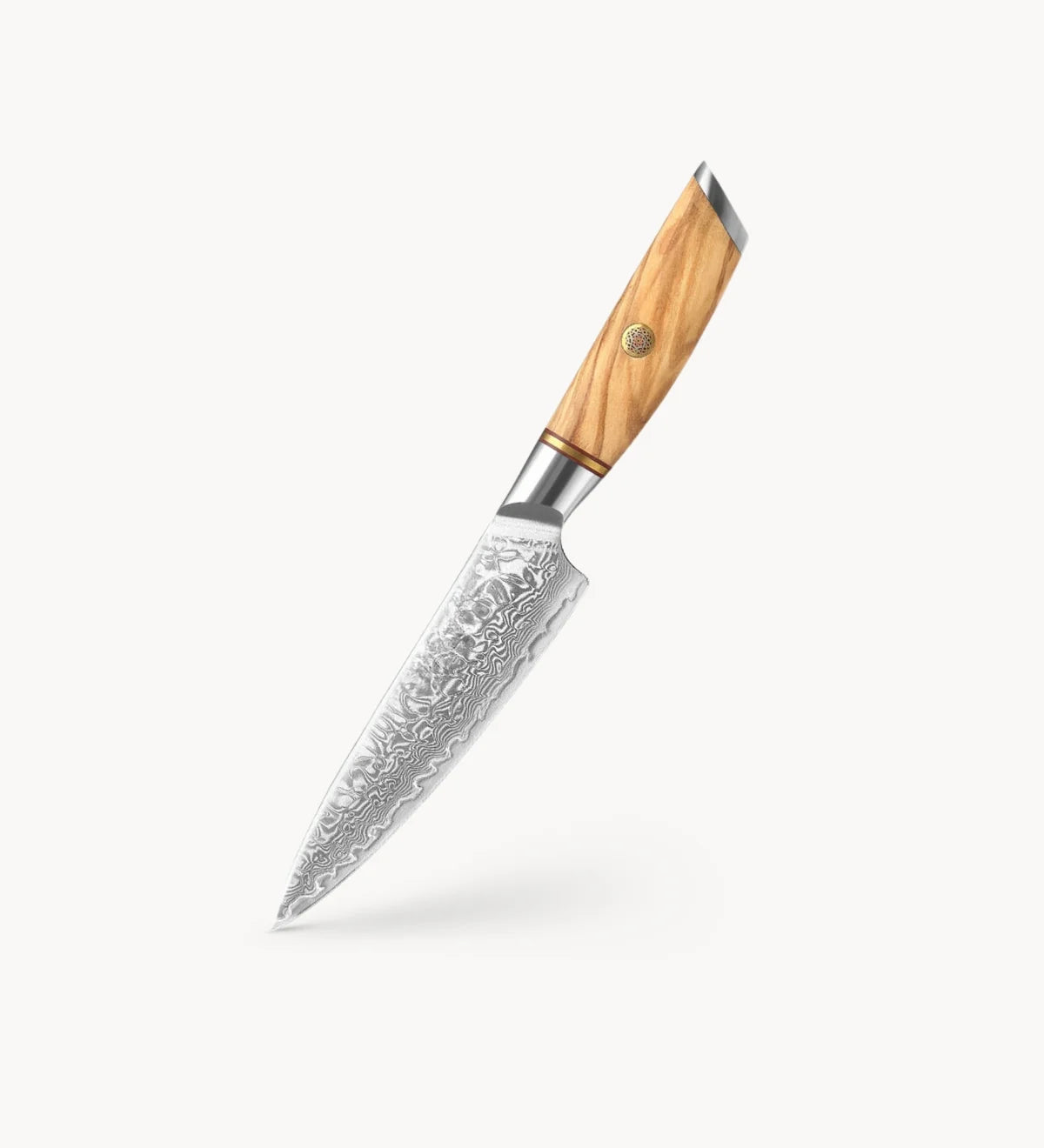
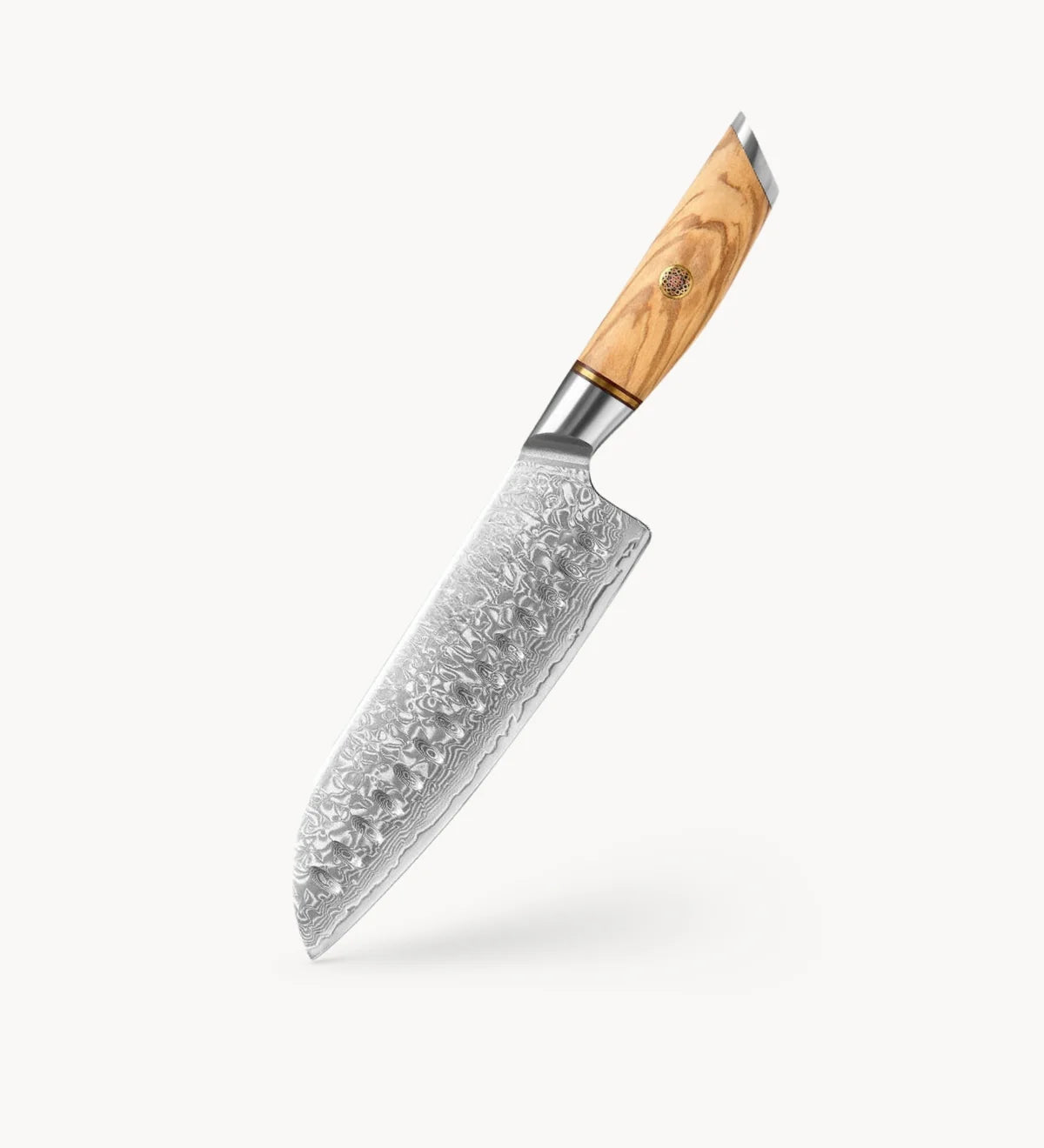
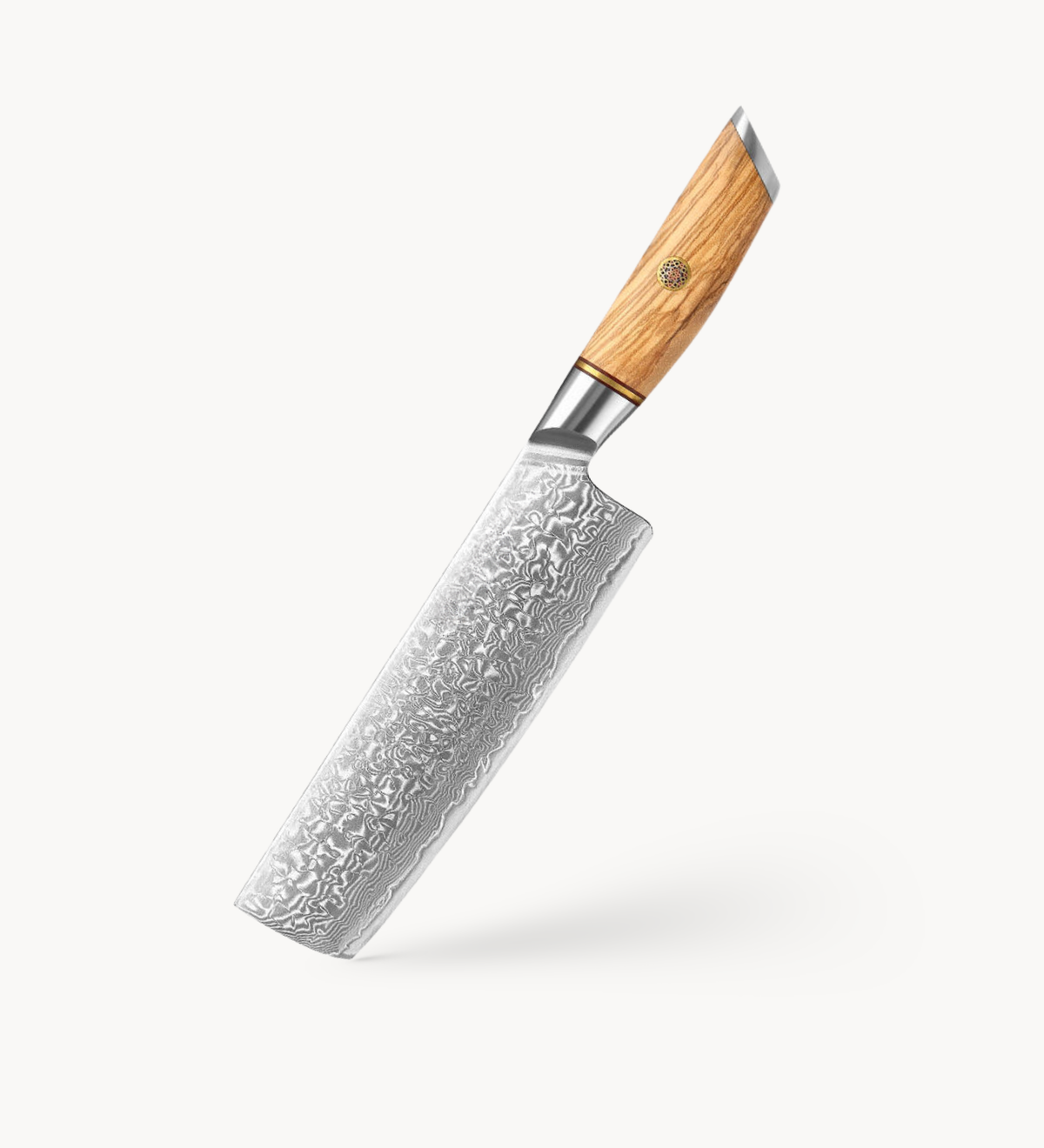
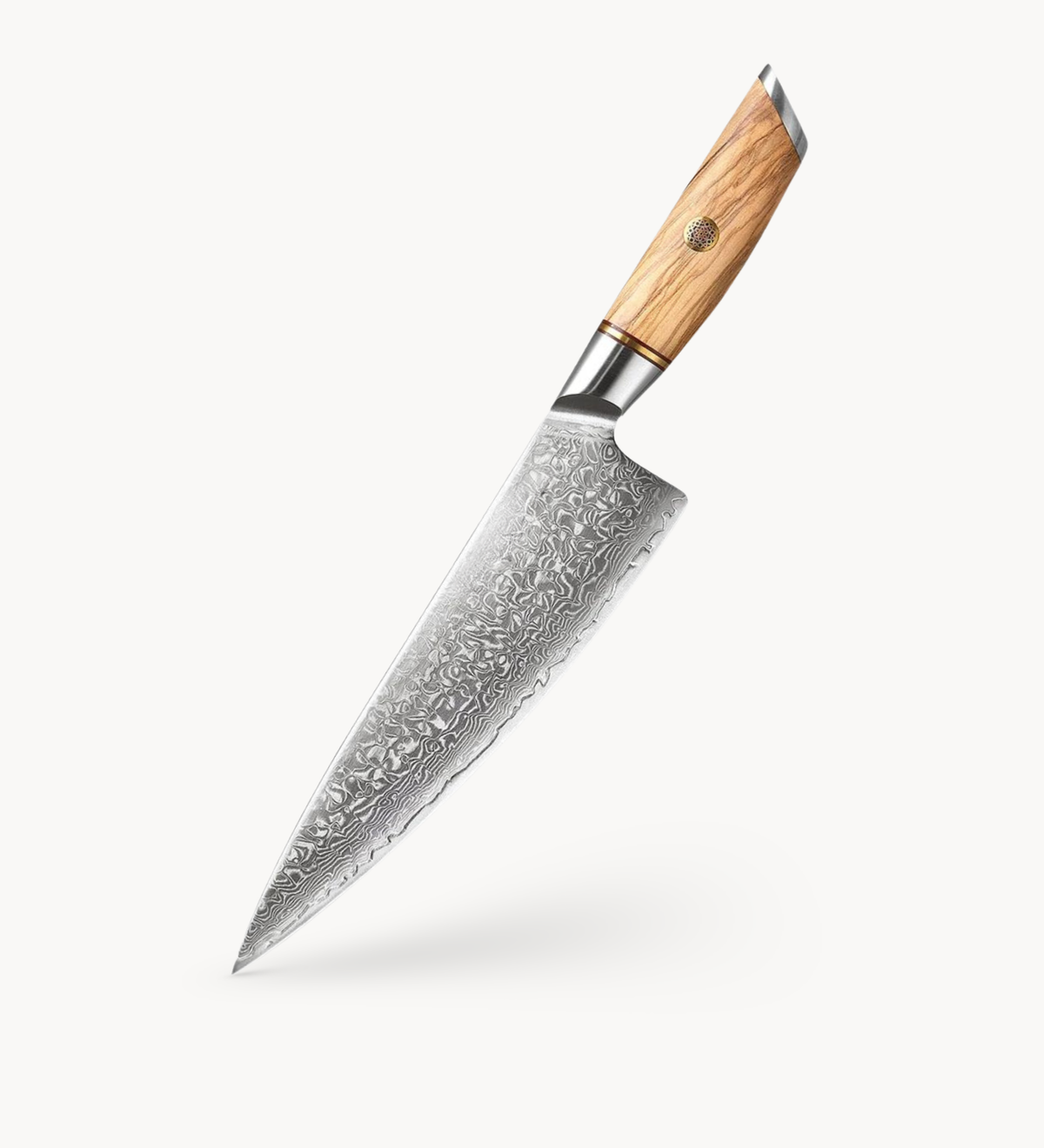

Tricolor San Mai · Multi-Metal Lamination
Cu-Mai Tricolor. The construction that leaves no margin.
The tricolor line is built on Cu-Mai construction, a forge-welded san mai structure in which the cladding itself is pattern-welded from three distinct metals: 316L stainless steel, copper, and brass.
The process begins at room temperature. Copper sheet stock (0.5–1mm thick) is layered between sheets of stainless and brass in a precise sequence. The stack is assembled cold, then the edges are sealed shut by forge-tacking before any heat is applied. This sealing step is not optional: copper liquefies before steel reaches forge-weld temperature, and an unsealed billet loses it on first heat. The sealed stack enters the forge and is brought to approximately 1050°C, the narrow window where steel becomes plastic enough to weld, while copper remains just below its melting point of 1085°C. At that temperature, a hydraulic press drives the layers into permanent metallurgical contact. The billet is then drawn out, manipulated into pattern, and prepared to receive the core. The high-carbon steel core (12Cr18MoV in both FireForge series) is inserted at the centre of the Cu-Mai cladding and forge-welded into final structure. The core is never folded or pattern-welded. It enters clean, centred, and intact. Its position determines where the cutting edge will be. Heat treatment is applied to the core alone. The cladding metals (stainless, copper, brass) do not harden. They are structural. They protect and carry. The core reaches its target hardness independently. A controlled ferric chloride etch is applied to the finished blade surface. Each metal responds differently: stainless steel oxidises dark, copper as warm tone, brass as gold. The pattern that emerges is the direct record of how these metals are arranged through the cross-section of the blade. It is not designed. It is not applied. It is revealed, and it cannot be produced twice.
Tricolor line
TRICOLOUR 53-LAYERS
53 layers. Bold presence. Uncompromised function.
The TRICOLOUR 53-LAYERS is built for cooks who do not compartmentalise. At 53 layers and 60 HRC, it occupies the space between a general-purpose blade and a precision tool, covering volume push-cutting and controlled tip work within the same session. The copper-dominant surface pattern is the direct result of the lamination: warm, high-contrast, unrepeatable. The Padauk burl handle with cupronickel bolster shifts balance slightly toward the grip, reducing wrist fatigue across extended prep.
Tricolor line
TRICOLOUR 37-LAYERS
37 layers. Restrained character. Precision-first geometry.
The TRICOLOUR 37-LAYERS does not announce itself. At 37 layers, stainless steel dominates the surface, with cooler tones, finer pattern, copper tracing through as a secondary register. The octagonal wa-style handle in figured sycamore with padauk burl accents positions balance at the blade–handle junction, favouring control. At 157 g it is the lighter blade. At 15° per side, it is built for precision over endurance.
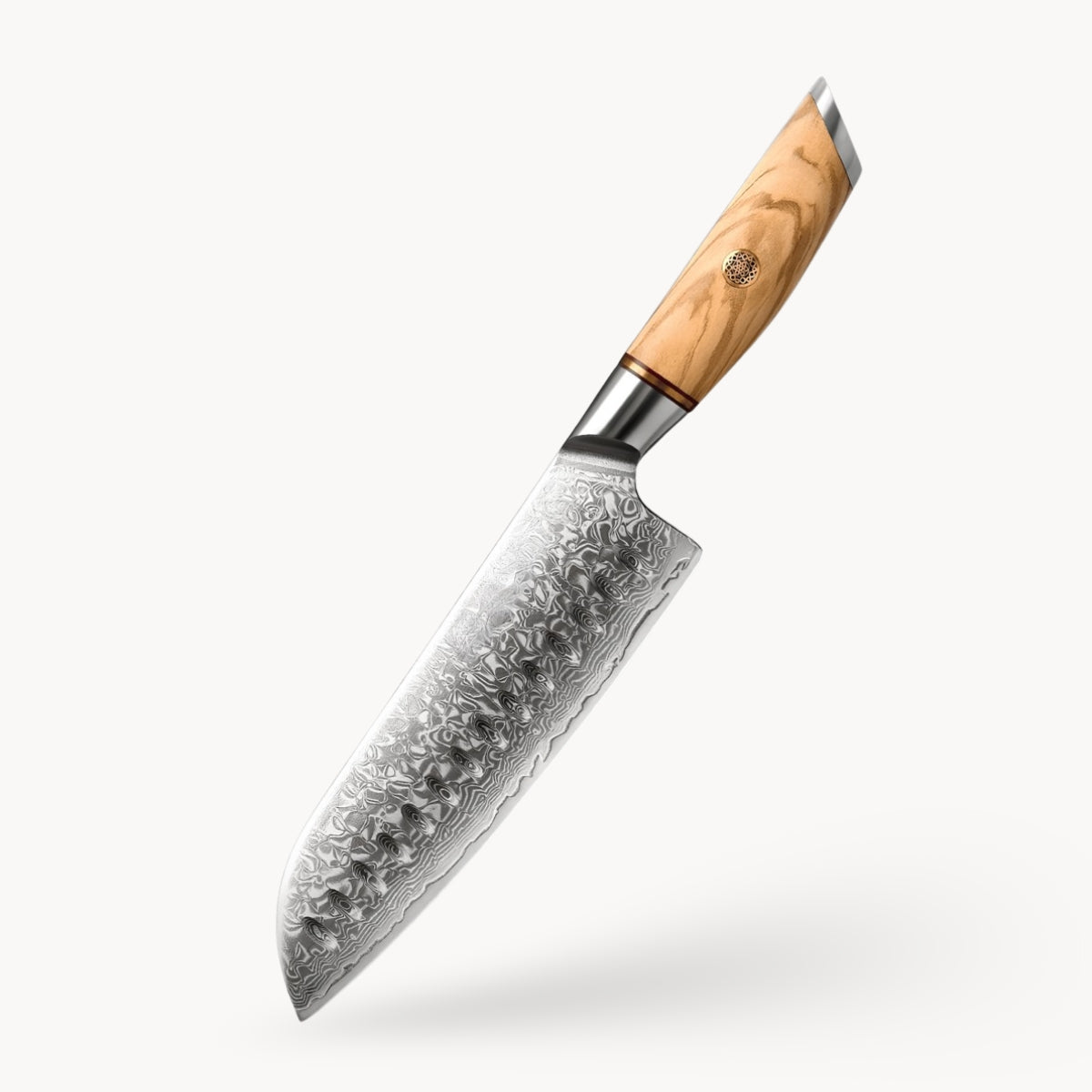
Santoku · 180 mm
One blade. The full session
£203.00
The geometry adapts between push cuts, slicing and precision work without switching knives. The edge holds through every transition: vegetables, proteins, fish. Without losing ground between tasks. That is what powder steel at this hardness delivers in a blade built for mixed work.
Burst · Santoku 182 mm — Full Specifications
Aurelia Series
Precision engineered for the serious cook.
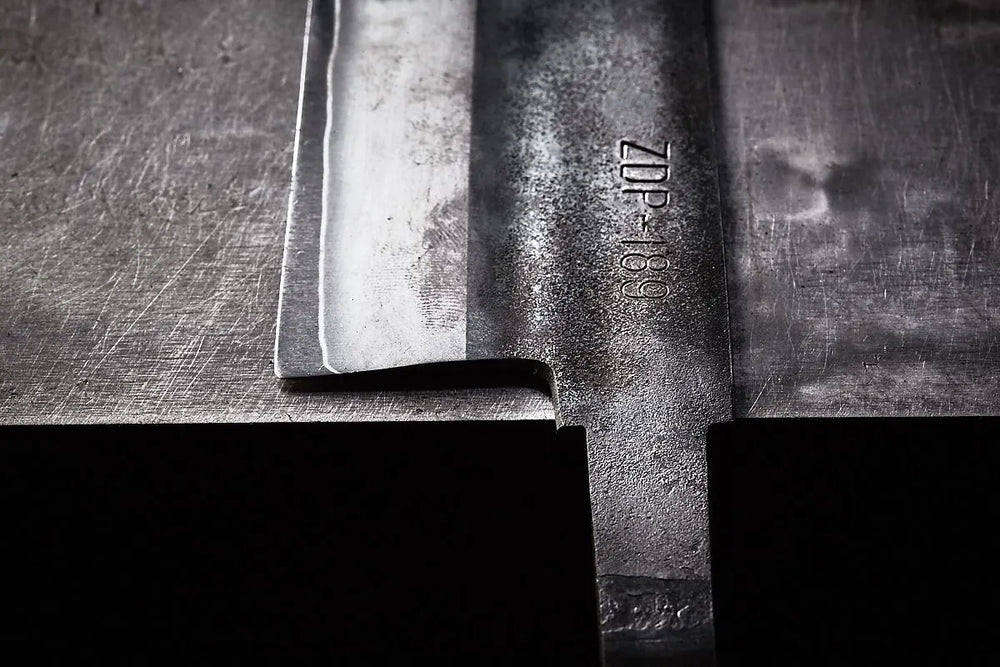
Knife made of ZDP-189 steel is laminated, which entails that the core is made of very strong steel covered with an external layer of softer stainless steel. Such a blade remains sharp for a very long time, its softer external layer makes it easier to sharpen, and it also protects the core steel from external factors.
Utility 141 mm — ZDP189 49-Layer San-Mai | Ultra-High Hardness Platform
£461.00
Nakiri 180 mm — ZDP189 49-Layer San-Mai | Ultra-High Hardness Platform
£623.00
Bunka Knife — ZDP189 Powder Metallurgy Core | Ultra-High Edge Retention
£649.00
We select steel based on hardness, edge geometry and maintenance requirements — not marketing.
12Cr18MoV delivers consistent performance at entry premium level. Accessible, corrosion-resistant,
maintainable under daily use.
10Cr15CoMoV operates at 60–62 HRC — the working range where edge retention and toughness are balanced for professional prep.
ZDP-189 reaches 66–67 HRC. Powder metallurgy construction.
Maximum edge stability. For those who know exactly what they are selecting and why.
Each specification exists for a reason.
The data is there. The decision is yours.